
A sharp pain in the chest when breathing can be scary, but it’s usually harmless. Many worry it’s the heart or that a vertebra is “out of place,” yet modern science shows it’s most often intense protective tension in the nerves and muscles. When chest structures become sensitized from stress or a sudden movement, the brain restricts breathing to protect the area, causing pain.
Is a vertebra locked or out of place?
One of the most persistent myths is that a thoracic vertebra can “come out of place” and needs to be “popped” back in. In reality, vertebrae are held very securely. What you feel as a “lock” is usually a sudden spasm or protective tightening of the small chest muscles and connective tissues.
The goal of treatment isn’t merely to “unlock” something, but to signal to the nervous system that movement and deep breathing are safe again.
Pain when inhaling — a case example: Riikka found relief with osteopathy
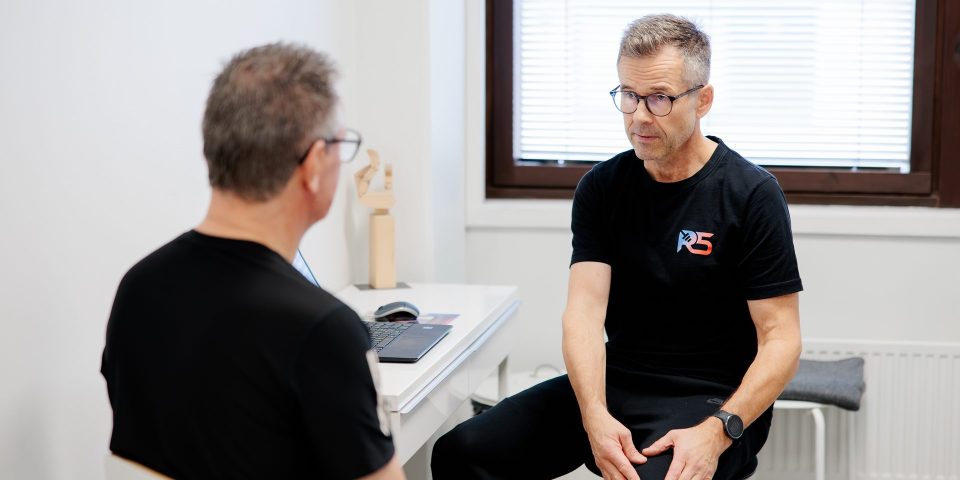
Here’s a recent case: a few weeks ago my client Riikka came in with a sharp chest pain. She was worried it might be a heart problem. As we talked through the symptoms, it became clear they didn’t point to a cardiac issue. Riikka is active and doesn’t smoke, and she’d already suspected the pain had another cause. That idea was reinforced when she mentioned years of tension in her upper back and similar episodes in the past.
This time the stabbing sensation had lasted longer and showed up particularly when she took a deep breath. The discomfort was focused along the edge of her right shoulder blade and made her feel uneasy. Interestingly, the pain didn’t occur during exercise, even when her heart rate rose.
What was done at the appointment?
I performed a standard osteopathic assessment and found marked stiffness in the thoracic spine and tight muscles across the upper back, especially on the right. The ribs also had limited mobility. When the ribs and thoracic vertebrae are effectively “locked,” the pressure or push from the expanding lungs can trigger the painful source. Sensory nerves detect the pressure as the lungs press against a stiff vertebra and rib, which can produce a sharp pain.
Treatment included soft tissue work and mobilization of the thoracic spine and ribs. At the end of the session I taught her two self-care exercises for the ribs and thoracic spine to help keep the problem away. She had three treatments in total, and after the second session the stabbing pain was gone.
”I’ve helped thousands of people free their breathing and get rid of sharp chest pains. If this kind of pain is disrupting your life or causing worry, don’t wait. Let’s calm your nervous system and restore free movement in your chest together.”
What causes sharp chest pains and what can you do about them?
Sharp pain when breathing often comes from the muscles of the chest wall or from stiffness/locking of the facet joints or ribs in the thoracic spine. This can be caused by things like work-related static postures or general lack of movement.
This actually common symptom can be treated by mobilising and manipulating the thoracic spine. You can also be taught mobility and maintenance exercises to keep the spine flexible after treatment. Depending on the case, 1–3 treatment sessions are usually enough, after which self-care exercises often keep symptoms under control.
Do you have similar pain when breathing? In my 30-year career I’ve treated hundreds of thoracic spine-related pain cases. You don’t have to suffer needlessly with this issue either.
👉 Book an osteopathy appointment here.
You might also be interested in another piece I wrote about breathing: “Shallow breathing – an osteopath’s tips for proper breathing.”
Thanks for reading my blog 🙂
Jerry
osteopath, personal trainer
tel. +358 40 557 3874